
A tropical island vacation can mean very different things depending on the place you choose. One traveler may want a simple stretch of beach and a quiet routine; another may want a trip built around water activities, local exploration, or a larger island with several areas to experience. The useful question is not which island is “best.” It is which destination makes the kind of trip you actually want practical.
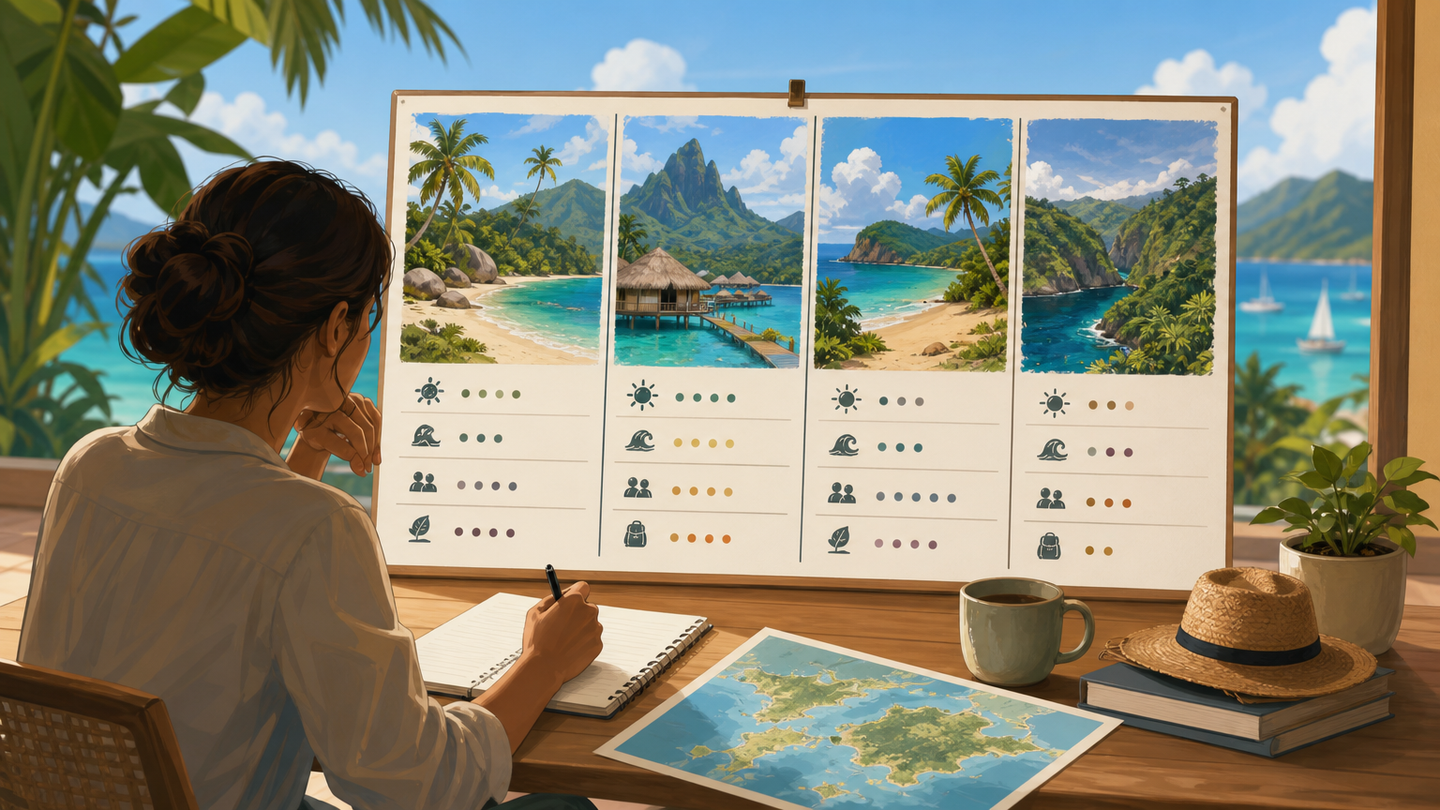
A good comparison starts by separating the vacation itself from the image of the vacation. Think about how you want your days to feel, how much moving around you are willing to do, and what constraints could affect the trip. That gives you a clearer way to weigh destinations without treating all tropical islands as interchangeable.
Defining the Alternatives
Start by putting destinations into broad trip styles rather than trying to rank them. A beach-centered stay suits travelers who want to settle into one area and keep daily decisions limited. An exploration-centered stay fits people who want to divide time among different parts of an island or combine beach time with other outings. A resort-centered trip places more of the vacation within one property, while an independently planned stay may involve arranging more pieces yourself.
These are not fixed categories. A destination can support more than one style, and the same island can feel very different depending on where you stay. Still, identifying your preferred style helps prevent a common mismatch: choosing a place for its scenery when the rhythm of the trip does not match your preferences.
Travel distance and the shape of the journey belong in this first comparison. Consider the full travel day, not simply the time you expect to spend on the island. Connections, arrival timing, and the transfer from an airport or port to your lodging can influence how rested or rushed the beginning and end of a vacation feel. If a relaxed trip is the priority, a complicated arrival may be a meaningful tradeoff. If the destination itself is your main priority, a longer journey may feel worthwhile.
Meaningful Differences to Compare
The pace of the island
Ask whether you want a concentrated stay or a vacation with variety built into each day. A smaller or more self-contained setting may appeal when your goal is to slow down. A destination with more distinct areas may suit travelers who prefer changing scenery and choosing among different daily plans. Neither approach is inherently better; the choice is about how much structure and movement you enjoy while away.
Also consider your tolerance for planning. Some travelers enjoy mapping out transfers, meals, and outings as part of the experience. Others would rather make fewer decisions after arrival. The destination and accommodation style should support that preference instead of fighting it.
Weather and tropical-cyclone exposure
Weather is more than a sunshine question. Tropical-cyclone patterns differ by ocean basin, and activity can occur outside official seasonal windows. That means a season label alone cannot tell you exactly what conditions a particular trip will bring.
When comparing islands, look at the destination’s climate patterns for your intended travel period and think about how much weather disruption you are prepared to accept. A flexible itinerary can absorb changes more easily than a tightly scheduled trip with several connections or limited time on the island. Travelers who need predictability may place more weight on this factor than those who are comfortable adjusting plans.
Entry, health, and local considerations
International islands should not be treated as interchangeable simply because they are geographically close. Entry and exit requirements, passport-validity rules, local laws, health considerations, and embassy contact information can differ from one destination to another.
For U.S. citizens traveling internationally by air, a valid U.S. passport is required to board an international flight departing from or entering the United States. That is only one part of planning, however. Each traveler’s citizenship, route, and destination can affect the complete set of documents and requirements.
Health planning is similarly destination-specific. Travel health information and defined travel-related risks can vary by destination, so it makes sense to include health needs in your comparison rather than treating them as an afterthought. If one option requires more preparation than another, decide whether the experience you want justifies that added effort.
Practical Tradeoffs
Every tropical island choice involves giving up something. A destination that feels appealing because it encourages staying put may offer less reason to range widely. A trip with many possible outings can demand more decisions and more time in transit. A shorter route may leave more energy for the vacation itself, while a longer journey may open up a different kind of island experience.
Budget is another practical lens, but it works best as a total-trip comparison rather than a single advertised number. List the travel, lodging, local transportation, meals, activities, and the costs that come with getting from arrival point to where you will stay. Then compare the likely shape of the trip each option buys you. This is not about finding a universal bargain; it is about avoiding a destination choice that leaves too little room for the parts of the vacation you value.
The same approach applies to convenience. A place that puts your preferred beach time, meals, and activities close together may suit a low-effort vacation. A destination that requires more movement can be a better fit when exploration is the point. Be honest about whether logistics sound enjoyable or exhausting to you.
Making the Decision
Turn your comparison into a short list of priorities. For example, you might place a calm pace first, then an uncomplicated journey, then weather flexibility. Someone else may put variety, time in the water, and the ability to explore ahead of convenience. Give more weight to the factors that would noticeably affect your enjoyment, rather than trying to score every detail equally.
Next, test each destination against the trip you can realistically take. How many travel days do you have? Do you want to stay mostly in one place or move around? Would a weather-related adjustment be manageable? Are you comfortable with the preparation involved in an international trip? These questions turn a dreamy comparison into a usable decision.
The right tropical island destination is the one whose pace, journey, planning demands, and practical requirements align with your priorities. Before booking an international trip, check the destination’s travel advisory, entry and exit rules, passport requirements, local laws, health guidance, and embassy information for your specific plans. With those essentials aligned, you can choose an island for the vacation you want to have—not just the picture that first caught your attention.
Information may contain errors, omissions, or outdated details. Confirm time-sensitive information with the relevant official or authoritative source.